


Everything you need to know about the NIE for carrying out procedures in Spain.
If you are thinking of buying a home on the Costa del Sol or need to deal with formalities in Spain, one question is likely to come up soon: how do you get an NIE? You can do it yourself, without hiring an intermediary. What matters is knowing which number you are applying for, where to apply and what documents you need to prepare.
In this guide we explain the main steps and clear up a common misconception: having an NIE is not the same as having a residence permit.
What is the NIE?
The Foreigner Identity Number (NIE) is a personal, unique and exclusive identifier assigned to foreign nationals who have economic, professional, social or other ties with Spain. It appears in the documentation and administrative procedures in which its holder needs to be identified. This is set out in Article 205 of the Spanish Immigration Regulation.
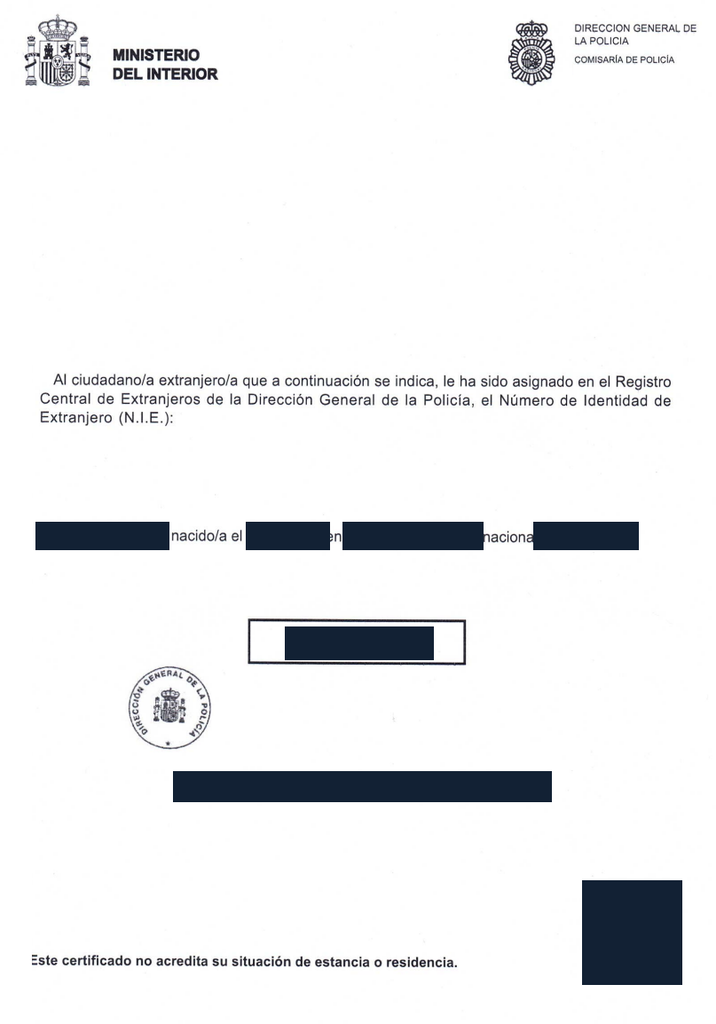
It is important to distinguish the number from the document on which it appears. A certificate of assignment proves that you have been given an NIE; the foreigner identity card (TIE), where applicable, is a different document and reflects a different administrative situation. The NIE on its own does not authorise you to live or work in Spain. The Spanish Ministry of Foreign Affairs states this explicitly for NIEs processed through consulates.
Why might you need an NIE?
The NIE identifies you in many dealings with the authorities and in transactions with economic or tax implications. In a property purchase, for example, it is worth planning for it from the outset: it may be needed for the transaction documents and the associated tax obligations. As a general rule, the NIE also serves as a foreign national’s tax identification number, as explained by the Spanish Tax Agency.
It can also be requested for other economic, professional or social interests linked to Spain. However, not all procedures have the same requirements: before assuming that you need an NIE for a rental, a bank account or a utility contract, check what identification the organisation handling it requires. If you already have an NIE assigned, the issue is usually not to apply for another number but to prove the one you have.
How to get an NIE in Spain, step by step
1. Check whether you already have an NIE
Review your previous Spanish documents: authorisations, certificates or cards may include it. If an NIE is already registered in your name, mention it when enquiring about the procedure you need. This will save you from starting an unnecessary application.
2. Find the right office and procedure
Assignment at the request of the person concerned is handled by the Directorate General of the Police, either directly or through an Immigration Office or Police Station. Check on the National Police website how the procedure is handled in your area and whether you need an appointment.
3. Prepare the application and the reason
The form is form EX-15. In it you must state the economic, professional or social reason for requesting the number. You can download the current form from the official immigration forms page.
Also prepare your valid passport or, where applicable, your national identity card, together with the copies and supporting documents required by the relevant office. If the reason is a property transaction, ask which specific proof the office accepts before your appointment.
4. Pay the fee
The National Police state that you must provide proof of payment of form 790, code 012. Check the amount and generate the form on the official website, as fees may be updated. Also check which payment methods are accepted for your application.
5. Submit the documents and keep the receipt
Check that the details on the EX-15 match those on your identity document exactly, especially first names, surnames and passport number. Submit the application through the channel indicated for your case and keep the receipt. Incomplete documentation may mean you have to correct the application or get a new appointment.
The regulations set a maximum of five days to resolve the application from the date it is entered in the register of the competent body. This legal deadline does not necessarily include the time needed to obtain an appointment, nor does it allow a specific delivery date to be promised, especially when applying through a consulate. Always check the status of your application with the body processing it. Source: Spanish Immigration Regulation, Article 205.
Can you apply for an NIE from abroad?
Yes. If you are not in Spain, you can apply through the Spanish Consular Office corresponding to your place of residence. Each office provides information on appointments, documents, payment and delivery. So before preparing your application, check your consulate’s website.
In general, consulates ask for the EX-15, a valid identity document, an explanation of the reason and payment of the fee. In some cases, applying through a duly authorised representative is accepted; the specific requirements for the power of attorney and appearance must be checked with the relevant consular office. Source: Spanish Ministry of Foreign Affairs.
Can I do it myself?
Yes. Applying for an NIE is an official procedure that you can prepare and submit yourself. You do not need to hire a private service to access the form, pay the fee or check the official requirements.
If you decide to do it yourself, this short checklist will help you get organised:
- Check that you do not already have an NIE assigned.
- Consult the official procedure page or your consulate’s website.
- Download the current EX-15 and state the reason for your application precisely.
- Check the documents required and pay the fee.
- Confirm the appointment or submission channel and keep the receipts.
When you are coordinating a purchase, a move or several procedures from another country, you may prefer support to put the steps in order and avoid confusion. At RIVA CELESTE we offer assistance with formalities for foreign nationals and obtaining the NIE. We can help you review what you need for your project and coordinate the steps included in our service. The choice is yours: you can carry out the procedure yourself or ask for assistance.
Frequently asked questions about the NIE
Is the NIE the same as residency?
No. The NIE is an identification number. Residency, where applicable, depends on a different procedure and authorisation. Having the number does not in itself prove the right to live in Spain. Source: Spanish Ministry of Foreign Affairs.
Do I need an NIE before buying a home?
It is advisable to consider it at the start of the transaction. A purchase may require identification for documents and tax procedures; your notary and the professionals involved in the transaction can confirm what you need and when. The Spanish Tax Agency explains the general relationship between the NIE and tax identification.
How much does it cost and how long does it take?
There is an official fee, the amount of which should be checked on the National Police website or with your consulate. The total time varies depending on appointment availability and the application channel; it is not advisable to plan a signing based solely on the legal deadline for resolution.
Can someone else submit it on my behalf?
Representation may be possible if it is authorised in the required form. Check the requirements of the office that will receive the application before preparing a power of attorney or sending original documents. Source: Spanish Ministry of Foreign Affairs.
Prepare the procedure in good time and move forward with clarity
The NIE is an important part of many projects in Spain, but it need not become an obstacle. If you know the reason for your application, consult the right official source and prepare your documents carefully, you can handle it yourself.
If you would prefer someone to help you organise the steps as part of your property project on the Costa del Sol, see our services or contact RIVA CELESTE. We will be happy to hear about your situation and explain how we can support you.
This guide provides general information and does not replace the instructions of the competent office or individual legal or tax advice where necessary.